Königsberg: The Military History of a Prussian Key City
· By Archivo Bélico editorial team
Königsberg's Prussian military history, from Kant and von Kleist to the General Staff: from Prussia's capital to Kaliningrad, a militarized Russian exclave.
The Prussian military history of Königsberg explains why this Baltic city, today Russian Kaliningrad, remains a strategic asset of the first order in Europe. Founded in 1255 by the Teutonic Order and, centuries later, made capital of East Prussia, Königsberg was for generations the administrative and military heart of the kingdom that shaped the modern Prussian Army, a cradle of generals, of the General Staff, and of a military culture that survived, transformed, until the Soviet assault of April 1945.
From Teutonic stronghold to Prussia's military capital
Königsberg was born as a fortress of the Teutonic Order during the Baltic Crusade against pagan Prussians, and that martial origin was never fully erased. With the secularization of the duchy in 1525 and its later incorporation into the Kingdom of Prussia in 1701, the city became the site where Prussian kings were crowned and an essential logistical hub for controlling the eastern flank against Poland-Lithuania and, later, the Russian Empire. Its university, the Albertina, founded in 1544, trained generations of officials and officers, and the city's economy grew largely oriented toward sustaining garrisons and arsenals.
The Russian occupation of Königsberg between 1758 and 1762, during the Seven Years' War, was a traumatic experience that left its mark on Prussian strategic memory: the city swore loyalty to Empress Elizabeth of Russia and only returned to Prussian hands after her death and Peter III's change in policy. The episode foreshadowed, two centuries in advance, the city's ultimate fate.
Von Kleist and the Prussian General Staff tradition
East Prussia and its capital were a seedbed of officers linked to the military reform that, after the 1806 disaster at Jena-Auerstädt against Napoleon, transformed the Prussian Army. Figures such as Gerhard von Scharnhorst and August von Gneisenau drove the professionalization of the officer corps and laid the foundations of the future Generalstab (General Staff), a model of centralized planning, rigorous academic training and merit-based selection that would become a reference for European armies of the 19th and 20th centuries.
The von Kleist surname runs through Prussian and German military history across several generations: from Ewald von Kleist, the Prussian poet-soldier who died at the Battle of Kunersdorf (1759), to Paul Ludwig Ewald von Kleist, a Wehrmacht field marshal who commanded the 1st Panzer Group in 1941 and Army Group A in the Caucasus. This East Prussian landed-nobility family, part of the Junkerklasse, exemplifies the close link between the Baltic rural aristocracy and the military career that sustained the Prussian war machine for centuries.
- Gerhard von Scharnhorst: reformer of the Prussian Army after 1806, driver of academic officer training.
- August von Gneisenau: co-author of the military reforms and strategist in the wars of liberation against Napoleon (1813-1815).
- The von Kleist family: East Prussian Junker lineage with generations of officers, including Field Marshal Ewald von Kleist.
- Helmuth von Moltke the Elder: heir to the General Staff doctrine, architect of the Prussian victories of 1866 and 1870-71.
Kant, the city and its intellectual legacy
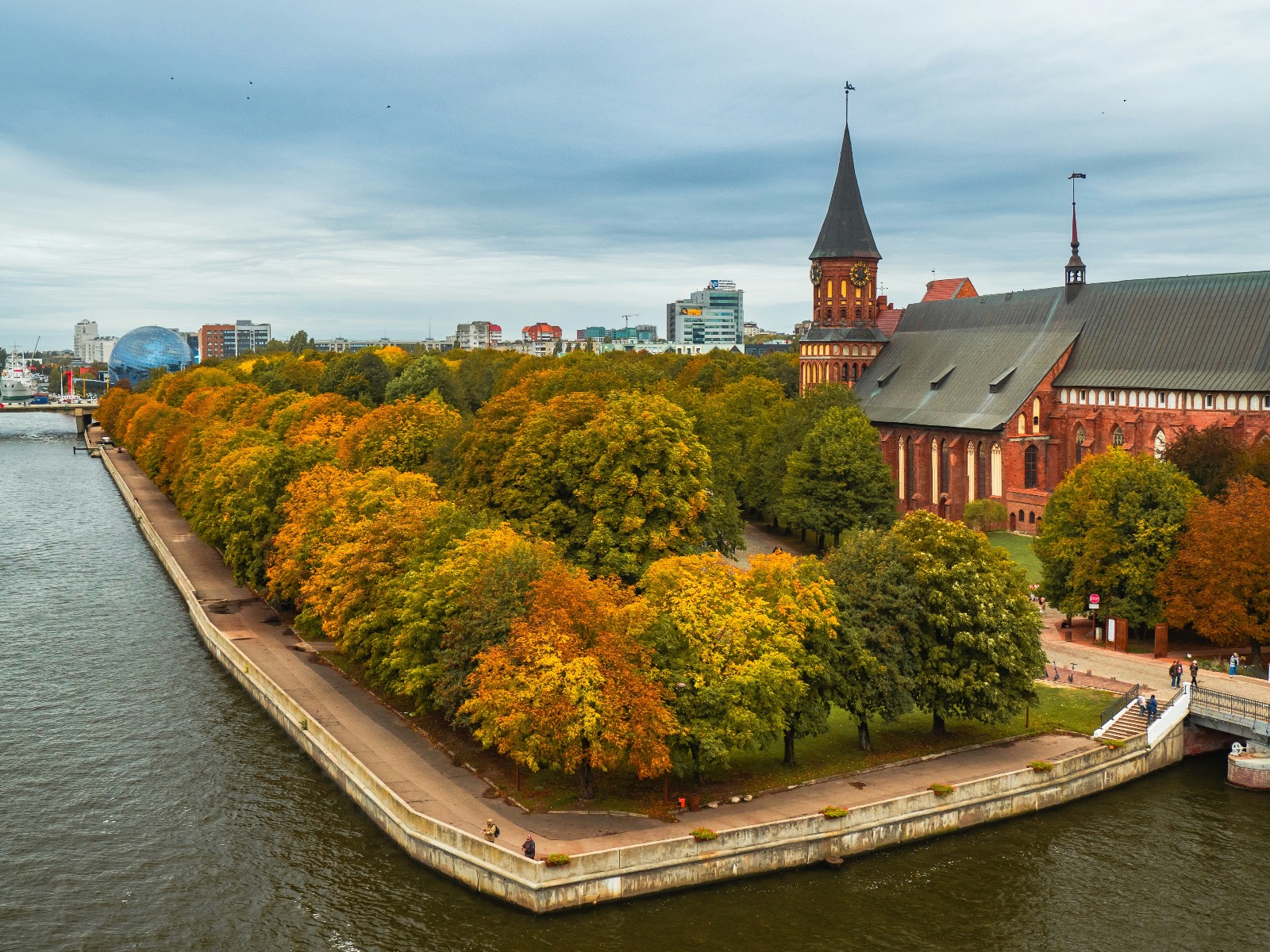
Immanuel Kant was born, lived and died in Königsberg (1724-1804), barely leaving it, and his figure coexists in the city's memory with those of strategists and generals. It is only an apparent paradox: militarized 18th-century Prussia also sustained an intense university and intellectual life, and Kant himself reflected on war and peace in his essay "Perpetual Peace" (1795), written in the same urban setting that had been besieged, occupied and re-fortified several times in his lifetime. Today his tomb, next to the cathedral, is one of the few Prussian remnants that survived the destruction of 1944-1945.
The Battle of Königsberg and the 1945 Soviet assault
Prussian military Königsberg met its catastrophic end between April 6 and 9, 1945, when the Red Army's 3rd Belorussian Front, under Marshal Aleksandr Vasilevsky, stormed the city after weeks of British (August 1943) and Soviet aerial bombardment that had already devastated the old town. The German garrison, some 130,000 men under General Otto Lasch, surrendered after four days of intense urban combat that caused tens of thousands of military and civilian casualties. Lasch defied Hitler's order to fight to the last, which earned him an in-absentia death sentence from the Nazi regime.
The Potsdam Conference (July-August 1945) sealed the region's fate: East Prussia was divided between Poland and the Soviet Union, and Königsberg fell to the latter. Nearly the entire surviving German population was expelled between 1945 and 1948, and the city was resettled with Soviet colonists. In 1946 it was renamed Kaliningrad in honor of Mikhail Kalinin, a Bolshevik leader who died that year.
From Kaliningrad to a militarized Russian exclave
The former Prussian capital became, during the Cold War, one of the most militarized zones in the USSR, home to the Baltic Fleet and closed to foreigners until 1991. With Lithuania's independence and the Soviet collapse, Kaliningrad became a Russian exclave cut off from the rest of the Federation by NATO and EU territory. It still hosts Iskander-M missile systems, S-400 air defenses, and a naval and land concentration that make it one of the most sensitive pieces on the European security board, a direct legacy of its eight centuries of military vocation.
| Year | Event |
|---|---|
| 1255 | Founded by the Teutonic Order |
| 1701 | Coronation of the first King of Prussia in Königsberg |
| 1758-1762 | Russian occupation during the Seven Years' War |
| 1806-1813 | General Staff reforms following the defeat by Napoleon |
| 1945 | Battle of Königsberg and German surrender (April) |
| 1946 | Renamed Kaliningrad, incorporated into the Russian SFSR |
| 1991-today | Militarized Russian exclave between Poland and Lithuania (EU/NATO) |
Frequently asked questions
- Why was Königsberg so important to the Prussian Army?
- It was the capital of East Prussia, the site of royal coronations, and home to a landed nobility, the Junkers, who traditionally supplied the Prussian officer corps and, later, the General Staff.
- What connection does Immanuel Kant have to the city's military history?
- Kant lived his whole life in a fortified and militarized Königsberg and reflected on war in "Perpetual Peace," though today his figure is associated more with philosophy than with the military.
- When and how did Königsberg fall in World War II?
- It fell between April 6 and 9, 1945, after the assault by the Soviet 3rd Belorussian Front; the German garrison, about 130,000 men, surrendered under General Otto Lasch.
- What is Kaliningrad today from a military standpoint?
- It is a Russian exclave between Poland and Lithuania, home to the Baltic Fleet and advanced missile systems such as the Iskander-M, considered a critical point in European security.
Sources and references
- Christopher Clark, Iron Kingdom: The Rise and Downfall of Prussia, 1600-1947, Belknap Press, 2006.
- Anthony Beevor, Berlin: The Downfall 1945, Viking, 2002.
- Michael Wieck, A Childhood under Hitler and Stalin: Memoirs of a Survivor of Königsberg, University of Wisconsin Press, 2003.
- Fritz Gause, Die Geschichte der Stadt Königsberg in Preußen, Böhlau Verlag, 1996.
- SIPRI, "Military Expenditure and Arms in Europe," annual reports, sipri.org.
- Immanuel Kant, Perpetual Peace, 1795 (Hackett Publishing ed., 2003).
- The National WWII Museum, "The Battle for Königsberg," nationalww2museum.org.