Sun Tzu and Clausewitz: Basic Military Doctrines
· By Archivo Bélico editorial team
Sun Tzu and Clausewitz's basic military doctrines compared, from deception and economy of force to friction and the center of gravity.
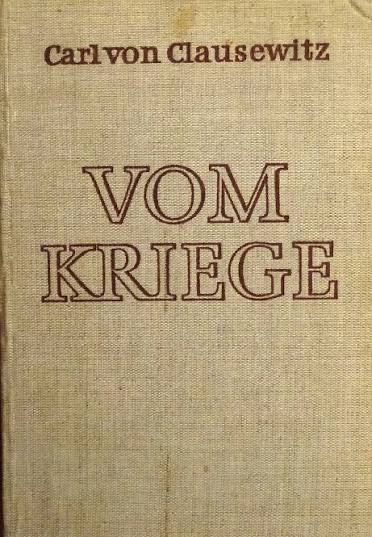
Sun Tzu and Clausewitz represent the two great traditions of Western and Eastern strategic thought, and comparing their basic military doctrines helps explain why they are still cited today in military academies worldwide. The Chinese general Sun Tzu, author of The Art of War around the 5th century BC, championed deception, economy of force and victory without battle as the supreme ideal; the Prussian Carl von Clausewitz, author of On War, published posthumously in 1832, insisted on friction, chance and the political nature of war as a phenomenon that admits no closed formulas.
Sun Tzu: deception and economy of force
The Art of War is a brief treatise of barely thirteen chapters, written amid the warring states of ancient China. Its central idea is that the best victory is one won without giving battle, subduing the enemy through deception, prior intelligence and the calculation of conditions — terrain, weather, command, discipline — before deciding whether to fight at all. The famous maxim "all warfare is based on deception" sums up a philosophy that prioritizes manipulating the enemy's perception, surprise and striking at weak points over frontal clashes of force.
Sun Tzu also stresses economy of force: an army that exhausts its resources in prolonged campaigns weakens the state itself, so speed and efficiency in the use of force are central values. This pragmatic, almost minimalist orientation contrasts with the later European tradition, more focused on decisive battle as a way of resolving conflicts.
Clausewitz: friction, chance and the center of gravity
On War, the unfinished work Clausewitz wrote after his experience in the Napoleonic Wars, including his participation in the 1812 Russian campaign, starts from a different premise: war is a complex phenomenon subject to "friction" — the accumulation of mishaps, communication errors, fatigue and chance that separate the plan on paper from actual execution — and therefore cannot be reduced to mathematical formulas or universal recipes.
- Friction: the thousand small obstacles — weather, fatigue, imperfect information — that make even the simplest thing in war difficult in practice.
- Center of gravity: the point (army, capital, alliance, popular will) on which the enemy's capacity to resist depends, and which should be identified and struck.
- Absolute war versus real war: Clausewitz distinguishes between a theoretical model of unlimited violence and war as it actually occurs, moderated by politics and available resources.
- War as the continuation of politics: the work's most quoted line, subordinating all military action to political objectives set by the state.
Politics as the framework for all strategy
Clausewitz's most influential contribution to modern doctrine is his insistence that war is never an end in itself, but an instrument in service of political goals: "war is the continuation of politics by other means." This idea forces any operational plan, however brilliant tactically, to be subordinated to the question of what political outcome is sought — something contemporary military doctrines, from NATO to the U.S. Army, still explicitly invoke in their planning manuals.
Two traditions, one field of study
Despite their differences, both authors share an interest in command leadership, the role of troop morale, and the need to adapt theory to the specific case rather than relying on rigid rules. Sun Tzu emphasizes knowledge — "know yourself and know your enemy" — as the condition for victory; Clausewitz emphasizes the commander's judgment, or "coup d'œil," for making sound decisions amid uncertainty. Neither offers a technical manual of maneuvers, but rather a conceptual framework for thinking about war.
Later reception: Jomini, Liddell Hart and modern doctrine
Clausewitz's contemporary, the Swiss Antoine-Henri de Jomini, offered a more systematic and prescriptive reading of the Napoleonic Wars, with geometric principles on lines of operation that proved highly influential in 19th-century military academies, including the American one during the Civil War. In the 20th century, British historian Basil Liddell Hart criticized what he saw as a simplified reading of Clausewitz that had fueled the doctrine of the all-out offensive in World War I, proposing instead the "indirect approach," a strategy seeking to unbalance the enemy before the decisive battle, in a spirit that speaks directly to Sun Tzu.
Today, both The Art of War and On War appear on the curricula of military academies such as West Point and the British Army, and their concepts — center of gravity, friction, deception, economy of force — remain in use in contemporary operational planning, from multi-domain operations doctrine to the analysis of today's hybrid conflicts.
| Concept | Sun Tzu | Clausewitz |
|---|---|---|
| Ideal of victory | Subdue the enemy without fighting | Destroy the enemy's capacity to resist |
| Role of deception | Central: "all warfare is based on deception" | Secondary to friction and chance |
| Nature of war | Rational calculation of prior conditions | Complex phenomenon, subject to friction and chance |
| Relation to politics | Implicit, subordinated to reason of state | Explicit: war is the continuation of politics |
| Key concept | Economy of force and knowledge of the enemy | Center of gravity and friction |
Frequently asked questions
- What is the main difference between Sun Tzu and Clausewitz?
- Sun Tzu prioritizes deception and victory without battle through prior calculation, while Clausewitz accepts war as a complex phenomenon dominated by friction and chance, always subordinated to political goals.
- What is 'friction' in Clausewitz's theory?
- It is the accumulation of mishaps, communication errors, fatigue and chance that separate a military plan on paper from its actual execution, making even the simplest actions difficult in practice.
- What does it mean that 'war is the continuation of politics'?
- It is Clausewitz's idea that no military action makes sense on its own: it must always be subordinated to the political objectives the state pursues through the use of force.
- Are these doctrines still used today?
- Yes. Concepts such as the center of gravity or strategic deception appear in NATO and other armies' planning manuals, and both works are studied at military academies such as West Point.
Sources and references
- Sun Tzu, The Art of War, trans. Samuel B. Griffith, Oxford University Press, 1963.
- Carl von Clausewitz, On War, trans. Michael Howard and Peter Paret, Princeton University Press, 1976.
- Antoine-Henri de Jomini, Précis de l'Art de la Guerre, 1838.
- Basil Liddell Hart, Strategy: The Indirect Approach, Faber & Faber, 1954.
- Michael Howard, Clausewitz: A Very Short Introduction, Oxford University Press, 1983.
- Hew Strachan, Clausewitz's On War: A Biography, Atlantic Monthly Press, 2007.