
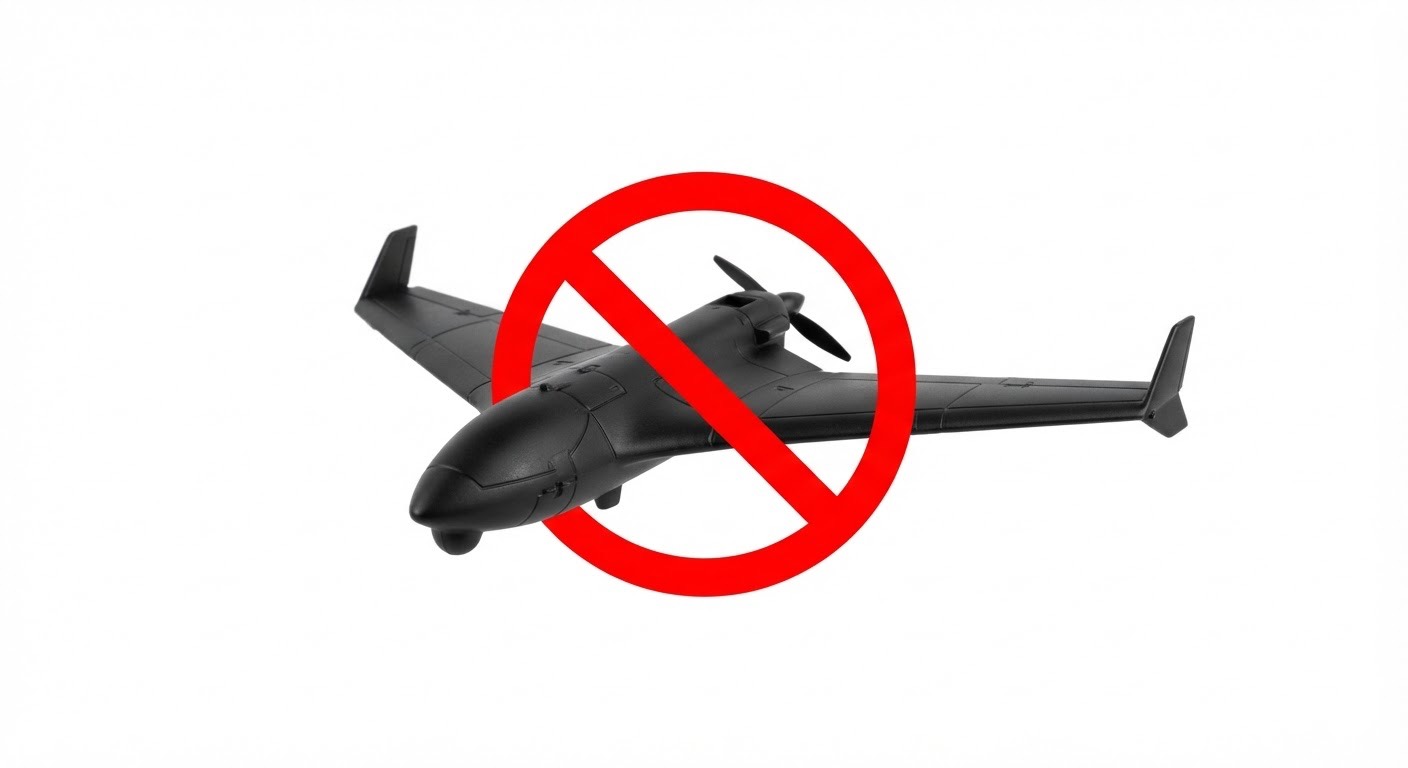
Counter-Drone Strategies (C-UAS): Detection and Interception
· By Archivo Bélico editorial team · Updated
How armies defend against drones: radar and radio-frequency detection, electronic warfare, kinetic interception and directed-energy weapons.
The spread of cheap, capable drones — from modified commercial quadcopters to loitering munitions — has made counter-drone defence, known in Western doctrine as counter-UAS (counter-unmanned aircraft systems), one of the top priorities of modern armies. This guide explains, at a doctrinal level and using public information, how that defence is organised: how drones are detected, jammed and destroyed. For the broader context, see our article on drones on the battlefield.
The counter-drone chain in five steps
- Detect: low-altitude radar, radio frequency, electro-optical and acoustic sensors combined.
- Identify: rule out birds, balloons and friendly aviation before committing effectors.
- Decide: pick the cheapest and safest effector for that target and that environment.
- Jam: cut or deceive control links and satellite navigation.
- Destroy: if everything else fails, kinetic fire or directed energy.
The problem: a cheap target against an expensive defence
The essential difficulty of counter-drone defence is economic. A modified commercial drone can cost a few hundred euros; a conventional anti-air missile, tens or hundreds of thousands. If every cheap attack forces an expensive interception, the attacker wins the war of attrition even without destroying anything. All counter-UAS doctrine revolves around breaking that asymmetry: detect early, jam cheaply, and reserve costly means for what truly requires them.
First layer: detecting what is barely visible
Small drones are hard to detect because they fly low and slow with a minimal radar cross-section. Modern detection combines several complementary sensors:
- Low-altitude radars optimised for small, slow targets, distinct from classic anti-aircraft radars.
- Radio-frequency analysers, which listen to the drone's control and video links and can even locate the operator.
- Electro-optical and infrared sensors, which visually confirm the target and classify the model.
- Acoustic detection, useful at short range thanks to the characteristic sound of propellers.
No single sensor is enough: current doctrine insists on fusing data from several of them to reduce false alarms (birds, balloons, friendly aviation) and shorten the time between detection and decision.
Second layer: electronic warfare
The cheapest and most widespread measure is jamming: saturating or spoofing the radio links between the drone and its operator and the satellite-navigation signals it depends on. A jammed drone typically loses control, returns to its launch point or crashes, depending on its programming. On the Ukrainian front, electronic warfare has become the leading cause of drone losses, according to available public analyses.
The attacker's response has been a race towards autonomy: drones that navigate without GPS, follow pre-programmed routes or are guided by fibre-optic cable, immune to radio jamming. That evolution, which we analyse in the article on Starlink and GPS-free drone navigation, is in turn driving the development of kinetic defences.
Third layer: kinetic interception
When jamming is not enough, the drone must be destroyed. Documented options range from the improvised to the sophisticated: machine guns and automatic cannon firing programmable fragmentation ammunition, light short-range missiles, nets and interceptor drones that chase and bring down the intruder. Armoured vehicles have also added passive protection, such as the anti-drone cages that proliferated in Ukraine.
The most recent trend is proximity-fuzed ammunition and radar-guided rapid-fire cannon, which lower the cost of each kill compared with the traditional missile. Several countries have also brought back medium-calibre anti-aircraft artillery — a concept that seemed obsolete — precisely because of its cost per shot.
The frontier: directed-energy weapons
High-energy lasers and microwave weapons promise what doctrine is looking for: a cost per shot of a few euros and a practically inexhaustible 'magazine' as long as there is electricity. The United States, the United Kingdom, Israel and others have tested prototypes with notable public results, although the physical limits — weather, power, cooling — remain considerable. We detail them in the article on laser weapons and counter-drone defence.
The four layers side by side
| Layer | Typical means | Strength | Main limit |
|---|---|---|---|
| Detection | Radar, radio frequency, optics, acoustics | Early warning and classification | False alarms and very small targets |
| Electronic warfare | Link and GNSS jammers | Low cost per drone neutralised | Useless against autonomous or fibre-optic-guided drones |
| Kinetic interception | Cannons, machine guns, light missiles, interceptor drones | Certain destruction of the target | Cost per kill and collateral damage risk |
| Directed energy | High-power lasers and microwaves | Cost per shot of a few euros | Dependence on power, weather and technical maturity |
The organisational lesson: defence in depth
No single system solves the problem. Converging doctrine — NATO, the US Army, lessons from Ukraine and the Middle East — insists on layered defence: combined sensors, jamming as the first resort, cheap kinetic means for the bulk of threats and high-value systems only for targets that justify them. Above all, integrating drone warning into the routine of every unit, not as a separate specialty.
Frequently asked questions
- What does counter-UAS mean?
- It is the Western doctrinal term (counter-unmanned aircraft systems) for the set of means and procedures designed to detect, identify, jam and shoot down hostile unmanned aircraft.
- Why not just shoot drones down with missiles?
- Because of cost: an anti-air missile can cost hundreds of thousands of euros against a drone worth a few hundred. Always using the missile hands the attacker a favourable economic war of attrition.
- Can electronic warfare stop every drone?
- No. Autonomous drones, those navigating without GPS and fibre-optic-guided drones are immune to radio jamming, which forces it to be complemented with kinetic means.
- Are there counter-drone defences for civilian sites such as airports?
- Yes. After incidents such as Gatwick in 2018, many airports and critical facilities deployed detection and jamming systems, although their use in civilian airspace is heavily regulated because of the risks to aviation and communications.
Sources and references
Sources and references
- U.S. Department of Defense — Counter-Small Unmanned Aircraft Systems Strategy (2021).
- RAND Corporation — reports on defence against unmanned aircraft systems.
- Royal United Services Institute (RUSI) — analysis of electronic warfare and drones in Ukraine.
- NATO — doctrinal documents on counter-UAS.
- IISS — The Military Balance (chapters on UAS and counter-UAS).
- CSIS — studies on short-range air defence and drones.