False Flag Operations: Definition and History
· By Archivo Bélico editorial team
What a false flag operation is, its naval origin, and documented cases like Gleiwitz 1939, Mukden 1931, and the never-executed Northwoods plan.
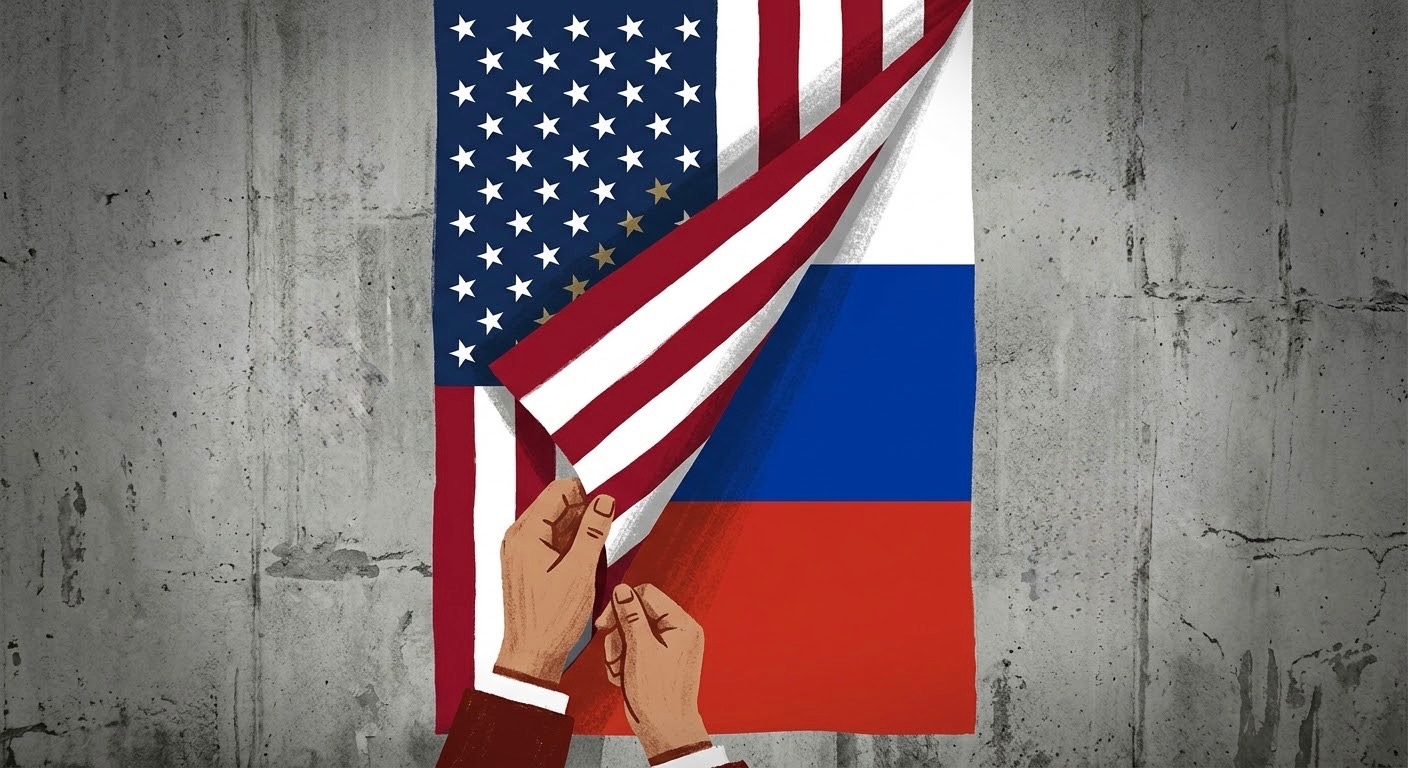
A false flag operation can be defined simply: it is a covert action designed to look like the work of a third party — usually the adversary meant to be blamed — in order to justify a reprisal, legitimize a war, or discredit an enemy before domestic or international public opinion. The term is documented here with historical rigor, distinguishing cases confirmed by later investigation from mere unproven accusations, which in contemporary debate are often used as a rhetorical tool within disinformation campaigns.
Naval origin of the expression
The expression "false flag" comes from naval warfare of the 16th to 19th centuries, when it was a relatively accepted practice for a warship or privateer to hoist the colors of a nation other than its own to approach an enemy vessel or a merchant prize without arousing suspicion, provided the true flag was raised before opening fire, in keeping with the laws of war of the time. From there, in the 20th century, the phrase came to designate, figuratively, any military or intelligence operation disguised under a false identity.
Documented historical cases
The Mukden Incident (1931)
On the night of 18 September 1931, officers of the Japanese Kwantung Army detonated a small explosive charge next to the South Manchuria Railway line, near Mukden, and blamed the sabotage on Chinese saboteurs. The incident, whose Japanese authorship was established by the League of Nations' Lytton Commission in 1932 and by the later testimony of the officers involved themselves, served as the pretext for the Japanese invasion of Manchuria and the creation of the puppet state of Manchukuo.
The Mainila Shelling (1939)
On 26 November 1939, Soviet artillery fired several rounds at the border village of Mainila, on Soviet territory, and Moscow accused Finland of the attack to justify breaking the non-aggression pact and launching the Winter War just days later. Historians such as Carl van Dyke, with access to Soviet archives after the end of the Cold War, documented that the fire came from Red Army positions.
The Gleiwitz Incident (1939)
The most cited case in European historiography is the assault on the Gleiwitz radio station (today Gliwice, Poland) on the night of 31 August 1939. An SS commando led by Alfred Naujocks, dressed in Polish uniforms, briefly seized the station, broadcast a short proclamation in Polish, and left behind the body of a prisoner from Dachau concentration camp, also dressed as a Polish soldier, as "proof" of the attack. The following day, 1 September 1939, Germany invaded Poland, citing among other pretexts alleged Polish border aggressions. German authorship was established by Naujocks' own confession during the Nuremberg trials.
Operation Northwoods (1962): a plan never carried out
In March 1962, the US Joint Chiefs of Staff drafted a classified document — declassified in 1997 and now accessible in the archive of the National Security Archive at George Washington University — proposing various covert operations, including staging terrorist attacks attributable to Cuba on US soil, to build public support for military intervention against Fidel Castro's regime. Defense Secretary Robert McNamara and President John F. Kennedy rejected the plan, which was never carried out. Its historical value lies precisely in showing, through official documentation, how such an operation was designed on paper without ever being executed.
How to tell a proven case from an unfounded accusation
In recent decades the "false flag" label has become common rhetorical ammunition in disinformation campaigns, applied without evidence to bombings, chemical attacks, or political crises to sow doubt and confusion. The difference between a documented historical case and a contemporary conspiracy theory is not narrative plausibility but the existence of verifiable evidence: declassified documents, judicial confessions, independent international investigations, or archival records confirmed by historians. The four cases cited in this article meet that standard; the vast majority of "false flag" accusations circulating today about ongoing conflicts do not, and should be treated with the same methodological skepticism.
- Existence of archival, judicial, or declassified intelligence documentation.
- Confirmation by independent investigations (international commissions, tribunals).
- Confessions or direct testimony from those responsible.
- Later historiographical consensus, not just a contemporaneous account from one side.
| Case | Year | Perpetrator | Status |
|---|---|---|---|
| Mukden Incident | 1931 | Kwantung Army (Japan) | Documented by the Lytton Commission |
| Mainila Shelling | 1939 | Red Army (USSR) | Confirmed by Soviet archives |
| Gleiwitz Incident | 1939 | German SS | Confessed at Nuremberg |
| Operation Northwoods | 1962 | US Joint Chiefs of Staff | Declassified plan, never executed |
Frequently asked questions
- Where does the term false flag come from?
- It comes from naval warfare of the 16th to 19th centuries, when ships could temporarily hoist another nation's flag to approach an enemy without raising suspicion, before identifying themselves with their true colors.
- Is the Gleiwitz incident historically confirmed?
- Yes. The officer in charge, SS operative Alfred Naujocks, confessed to carrying it out during the Nuremberg trials, and historians consider it a fully documented case.
- Was Operation Northwoods ever carried out?
- No. It was a plan proposed in 1962 by the US Joint Chiefs of Staff that President Kennedy and Secretary McNamara rejected; it is known today thanks to its 1997 declassification.
- Can any unresolved attack be called a false flag?
- No. That term only applies rigorously when there is verifiable evidence of covert authorship; absent proof, it is a hypothesis or a propagandistic accusation, not an established historical fact.
Sources and references
- League of Nations, Report of the Lytton Commission, 1932.
- Carl van Dyke, The Soviet Invasion of Finland, 1939-40, Frank Cass, 1997.
- Nuremberg Trials, Testimony of Alfred Naujocks, 1945-1946.
- National Security Archive, George Washington University, "Operation Northwoods," declassified document, 1997.
- Richard J. Evans, The Third Reich at War, Penguin Press, 2008.
- James Bamford, Body of Secrets, Doubleday, 2001.
- Gerhard Weinberg, A World at Arms: A Global History of World War II, Cambridge University Press, 1994.