
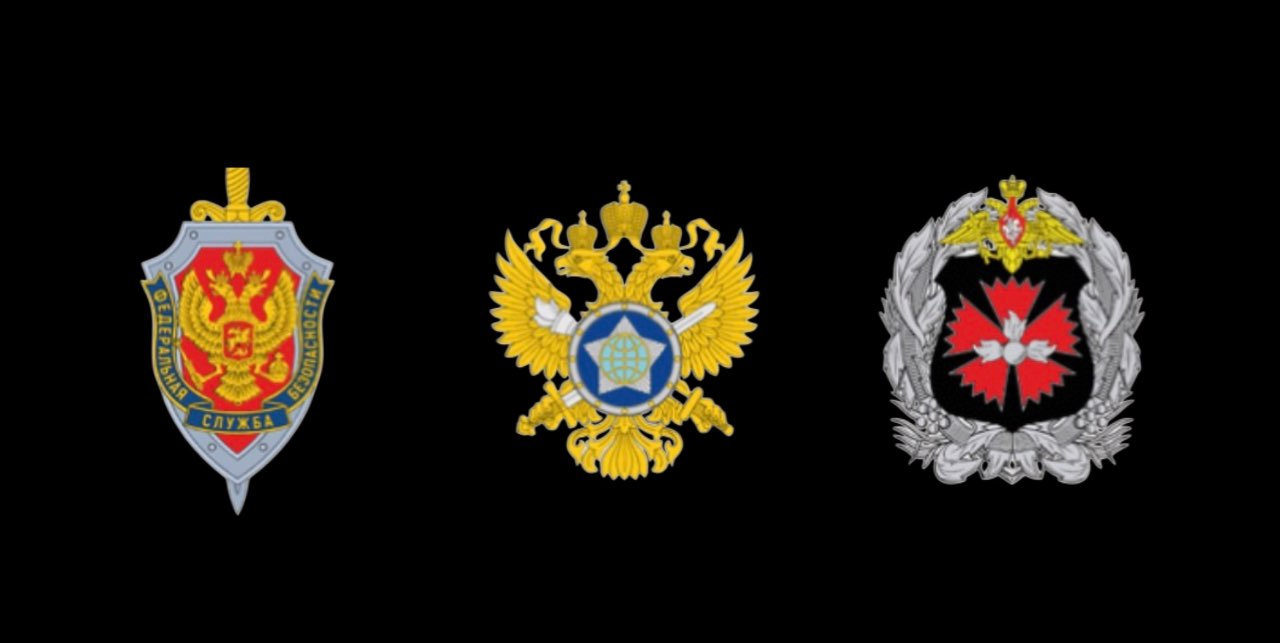
From the Cheka to the FSB and GRU: Russian Intelligence
· By Redacción Archivo Bélico
A history of Russian intelligence from the 1917 Cheka to the KGB and its successors, the FSB, SVR and GRU. What each does and the cases that define them.
The history of Russian intelligence runs almost unbroken for more than a century. The Cheka, founded in 1917, passed through a string of acronyms before becoming the KGB, which split apart in 1991. Today the three main agencies are the FSB (domestic security), the SVR (foreign intelligence) and the GRU (military intelligence), and all three still carry much of the culture they inherited.
Timeline: from the Cheka to the FSB
- 1917 — Lenin sets up the Cheka under Felix Dzerzhinsky to fight 'counter-revolution'. Russian officers still proudly call themselves 'chekists'.
- 1918 — The Red Army creates the forerunner of the GRU. Military intelligence would always remain separate from the political police.
- 1922-1934 — The Cheka becomes the GPU, then the OGPU, before being absorbed into the NKVD.
- 1934-1938 — The NKVD carries out the Great Terror; hundreds of thousands are shot.
- 1954 — After Stalin's death and Beria's fall, the KGB is created under Communist Party control.
- 1991 — KGB chairman Vladimir Kryuchkov joins the failed August coup. By December the USSR is gone and the KGB is dismantled.
- 1991-1995 — Foreign intelligence goes to the SVR; after several reorganisations, domestic security settles into the FSB (1995).
- 1998-1999 — Former KGB officer Vladimir Putin runs the FSB before becoming prime minister and then president.
What each agency does today
| Agency | Remit | Successor to |
|---|---|---|
| FSB | Counter-intelligence, counter-terrorism, borders, internal security | KGB internal directorates |
| SVR | Civilian foreign intelligence | KGB First Chief Directorate |
| GRU (officially GU) | Military intelligence, special operations | Red Army intelligence |
| FSO | Protection of leaders and Kremlin communications | KGB Ninth Directorate |
Unlike Western systems, the lines are blurred. Soldatov and Borogan have shown how the FSB expanded abroad, especially across the former Soviet space, and how its senior officers became a new political elite.
FSB vs GRU: the key difference
The FSB is essentially a domestic security service with police powers; the GRU answers to the General Staff and works for military commanders. Over the past two decades Western governments have publicly blamed the GRU for several high-profile operations abroad, giving it a visibility it never used to have.
Officially attributed cases
- Litvinenko (2006): a British public inquiry concluded in 2016 that his polonium poisoning was an FSB operation 'probably approved' by the FSB director and by Putin. Moscow denies it.
- Salisbury (2018): the UK government blamed the GRU for the Novichok attack on Sergei Skripal. Russia denies it.
- US election (2016): in 2018 the Justice Department indicted twelve GRU officers over computer intrusions. None has stood trial.
These attributions come from governments and courts and are rejected by Russia; they should be read as such.
Why the continuity matters
Archive-based scholarship, from Andrew and Mitrokhin to Haslam, stresses continuity: recruitment methods, kompromat, disinformation and a culture that puts state security above the law. Understanding the Cheka helps explain today's FSB.
FAQ
Frequently asked questions
- Is the FSB the same as the KGB?
- No. It is one of its successors, inheriting domestic security; foreign espionage went to the SVR.
- Was the GRU part of the KGB?
- No. It was always military intelligence, independent from and often a rival of the KGB.
- What does 'chekist' mean?
- A member of the Cheka; the term is still a badge of identity in Russia's security services.
Sources and references
- Christopher Andrew and Vasili Mitrokhin, The Sword and the Shield: The Mitrokhin Archive and the Secret History of the KGB, Basic Books, 1999.
- Christopher Andrew and Oleg Gordievsky, KGB: The Inside Story, HarperCollins, 1990.
- Jonathan Haslam, Near and Distant Neighbors: A New History of Soviet Intelligence, Farrar, Straus and Giroux, 2015.
- Andrei Soldatov and Irina Borogan, The New Nobility: The Restoration of Russia's Security State and the Enduring Legacy of the KGB, PublicAffairs, 2010.
- The Litvinenko Inquiry: Report into the death of Alexander Litvinenko, Sir Robert Owen, House of Commons, January 2016.
- Gobierno del Reino Unido, declaraciones de la primera ministra ante la Cámara de los Comunes sobre el ataque de Salisbury (marzo and septiembre de 2018).
- U.S. Department of Justice, acusaciones formales contra oficiales del GRU (julio de 2018 and octubre de 2020).